
If you want to train four days per week without turning every workout into a full body marathon, an upper lower split can be one of the easiest ways to organize your strength training.
The concept is simple. You alternate between workouts that focus on your upper body and workouts that focus on your lower body. That gives you enough room to train all of the major muscle groups while still allowing time to recover before you train them hard again.
For many people, that balance is exactly what makes the split so useful. You get more focused workouts than you would with a full body routine, but you do not need to be in the gym five or six days every week.
An upper lower split can work for building muscle, getting stronger, or simply creating a more organized routine. The important thing is understanding that the split itself is only the framework.
Your results still come from choosing good exercises, performing a manageable amount of work, progressing gradually, and recovering well enough to keep showing up.
Here is how to put all of that together.
What Is an Upper Lower Split and How Does It Work?
An upper lower split divides your strength training into upper body days and lower body days.
Upper body sessions typically train the chest, back, shoulders, biceps, and triceps.
Lower body sessions focus on areas such as the quadriceps, hamstrings, glutes, and calves, with core work added when it makes sense for the program.
The most common setup uses four workouts each week:
- Monday: Upper body
- Tuesday: Lower body
- Wednesday: Rest
- Thursday: Upper body
- Friday: Lower body
- Weekend: Rest or lighter activity
This schedule works because you can train on consecutive days without asking the same muscles to do the hardest work two days in a row.
After Monday's upper body session, those muscles get a break while you train your lower body on Tuesday. By the time your next upper workout arrives, you have had several days before training those areas again.
The same thing happens with your lower body.
That makes the split especially practical for someone who wants four strength sessions but does not want every workout to include the entire body.
Your two upper workouts also do not have to be exact copies of each other.
One might begin with a chest press and row, while the second uses different variations or places more attention on another movement. Your lower sessions can work the same way, with one day emphasizing the squat and another giving the hip hinge more attention.
You still want enough consistency to measure progress.
Changing everything every week can make it difficult to know whether you are actually getting stronger. Keeping your main movement patterns relatively stable gives you something clear to improve.
The split can also adapt to different goals.
If strength is your priority, your main exercises can use heavier resistance and lower repetition ranges. If building muscle matters more, you can use moderate repetitions and enough weekly training volume to challenge the muscles consistently.
Think of the upper lower split as the schedule that holds the program together. What you put inside that schedule determines how effective it becomes.
Is an Upper Lower Split Good for Beginners?
Yes, an upper lower split can work for beginners, although it is not always the simplest starting point.
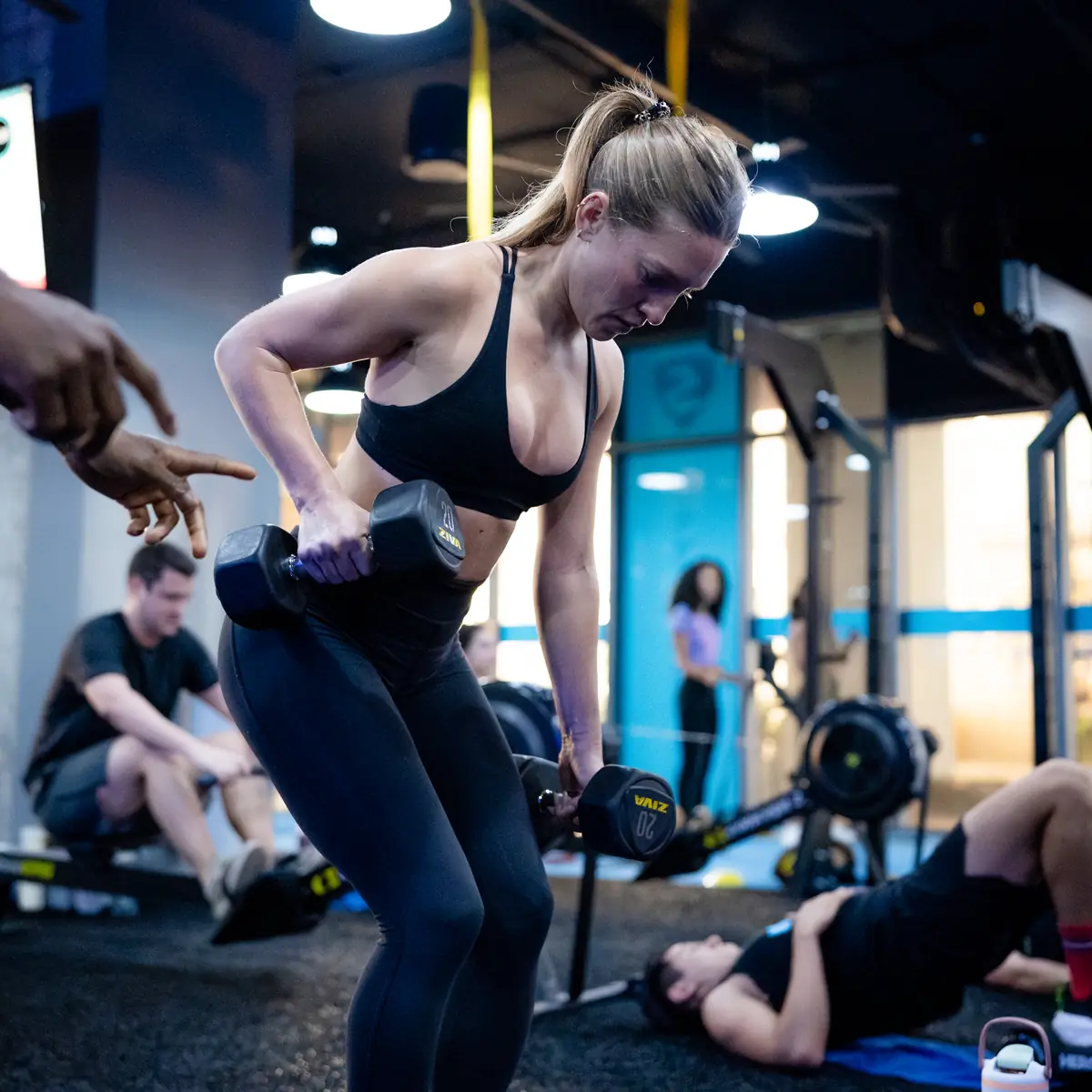
If you have never strength trained before, two or three full body workouts per week can make learning the basics easier.
You get repeated practice with movements such as squats, hip hinges, presses, and rows without needing to organize four separate training days.
That practice matters because a beginner is not just building muscle or strength. You are also learning how the movements feel, how to control the resistance, and how to repeat good technique from one workout to the next.
Once those basics feel more familiar, an upper lower split can be a natural next step, especially if you want to train four days each week.
A beginner friendly schedule might look like this:
- Monday: Upper body
- Tuesday: Lower body
- Wednesday: Rest
- Thursday: Upper body
- Friday: Lower body
- Weekend: Rest or lighter activity
The benefit is that each workout becomes more focused.
Instead of trying to train your chest, back, shoulders, arms, quadriceps, hamstrings, glutes, and calves in the same session, you can give each half of the body more attention.
That does not mean you should suddenly double how much training you do.
The extra gym days are there to spread your weekly workload across more sessions, not to give you an excuse to fill every workout with extra exercises.
If you can only train twice per week, full body training will usually be easier to organize because both sessions can train all of the major muscle groups.
If four days genuinely fit your week and you already feel comfortable with the basic exercises, an upper lower split can work very well without waiting until you consider yourself an advanced lifter.
What Exercises Should You Do on Upper Body Days?
A good upper body day should include enough pushing and pulling to train your chest, back, shoulders, and arms without wasting time on several exercises that do nearly the same thing.
One of the easiest ways to organize the session is by movement pattern.
For most people, that means including:
- A horizontal press
- A horizontal pull
- A vertical press
- A vertical pull
- Optional biceps work
- Optional triceps work
A practical workout could include:
- Chest press or bench press
- Row variation
- Shoulder press
- Pull down or pull up
- Biceps curl
- Triceps extension or press down
The larger movements usually belong near the beginning because they train several muscle groups at once and require more energy.
A chest press trains the chest while also involving the shoulders and triceps. A row trains the back while the biceps contribute. A shoulder press adds more direct shoulder work, while a pull down or pull up gives you another pulling pattern from a different angle.
You do not need every press variation you know in the same session.
Bench press, incline press, machine press, and dumbbell press can all be useful, but performing all of them in one workout may add more overlap than value.
A simpler approach is usually better.
Choose one main press and one main row. Add a vertical press and vertical pull if they fit your training volume. Then finish with direct arm work if you want it.
Remember that your arms are already involved in the larger exercises.
Rows and pull downs train the biceps. Chest and shoulder presses involve the triceps. That does not make curls and triceps work unnecessary, but it does mean you may not need large amounts of direct arm training on top of everything else.
Exercise order can also reflect what you care about most.
If improving your chest press is a priority, put it early. If developing your back matters more, begin with a row or another pull instead.
The exercise that matters most generally deserves your best energy.
The goal of an upper body day is not to check off every upper body exercise available in the gym.
It is to cover the important movement patterns, perform enough quality work, and leave yourself something you can realistically recover from and improve.
What Exercises Should You Do on Lower Body Days?
A strong lower body workout should train more than your quadriceps.
For most people, the foundation is a squat pattern, a hip hinge, and a single leg movement, followed by more targeted work when it fits the goal.
A simple lower body session might include:
- Squat variation
- Hip hinge variation
- Reverse lunge, split squat, or step up
- Hamstring curl
- Calf raise
- Optional core exercise
Your squat variation is often one of the main movements because it trains several lower body muscles at once, including the quadriceps and glutes.
That could mean a back squat, front squat, goblet squat, or leg press depending on your experience, equipment, and what you can perform confidently.
A beginner does not earn extra credit for choosing the most complicated version.
If you can control a goblet squat or leg press better than a barbell squat, that may be the smarter place to begin.
Your hip hinge gives the workout another important movement pattern.
Romanian deadlifts and other hinge variations place more emphasis on the glutes and hamstrings than a squat does, which helps create a more balanced lower body session.
Single leg exercises such as reverse lunges, split squats, and step ups can come next.
You usually do not need several of them in the same workout. One well chosen movement can provide plenty of additional work after your main squat and hinge.
From there, exercises such as leg curls and calf raises can fill specific gaps without adding another demanding compound movement.
A simple exercise order could look like:
- Squat variation
- Hip hinge
- Single leg movement
- Hamstring exercise
- Calf exercise
- Optional core work
That order can change based on your priorities.
If improving your hip hinge is more important, you can place it first and perform it while you are fresh.
Your two lower body days can also have slightly different emphasis.
One might begin with a squat and follow with a Romanian deadlift. The other could begin with another hinge variation and use a leg press or different squat afterward.
The important thing is not creating endless variety.
It is making sure the major patterns are covered and that you can measure your progress from week to week.
How Many Sets and Reps Should You Do on an Upper Lower Split?
There is no single sets and reps formula that every upper lower split needs to follow.
The right amount depends on your goals, experience, exercises, and how well you recover.
For many people, around 2 to 3 working sets per exercise is a sensible place to begin.
That is enough to create meaningful training without turning every workout into a test of how much fatigue you can tolerate.
Rep ranges can vary depending on the movement.
A simple framework is:
- Main compound exercises: around 5 to 10 reps
- Secondary compound exercises: around 8 to 12 reps
- Isolation exercises: around 10 to 15 reps or more
You might perform three sets of a chest press and row using moderate reps, then use two or three sets for shoulder presses and pull downs.
Smaller exercises such as curls or triceps extensions can use lighter resistance and higher repetitions.
Your lower body workouts can follow the same idea.
Squats and hip hinges can form the foundation, while lunges, leg curls, and calf raises use rep ranges that make sense for those movements.
You also do not need to force every exercise into three sets of 10.
That can be a useful starting point, but a squat and a biceps curl do not need identical programming just because they appear in the same weekly plan.
What matters more is the amount of work you accumulate across the week.
Because an upper lower split trains each half of the body twice, the sets from both sessions add together.
If you keep adding more sets to every workout without thinking about that weekly total, recovery can quickly become the limiting factor.
Start with enough work to make progress.
Earn the need for more rather than assuming more is always better.
How Do You Progress an Upper Lower Split?
Progress does not require adding weight to every exercise every time you enter the gym.
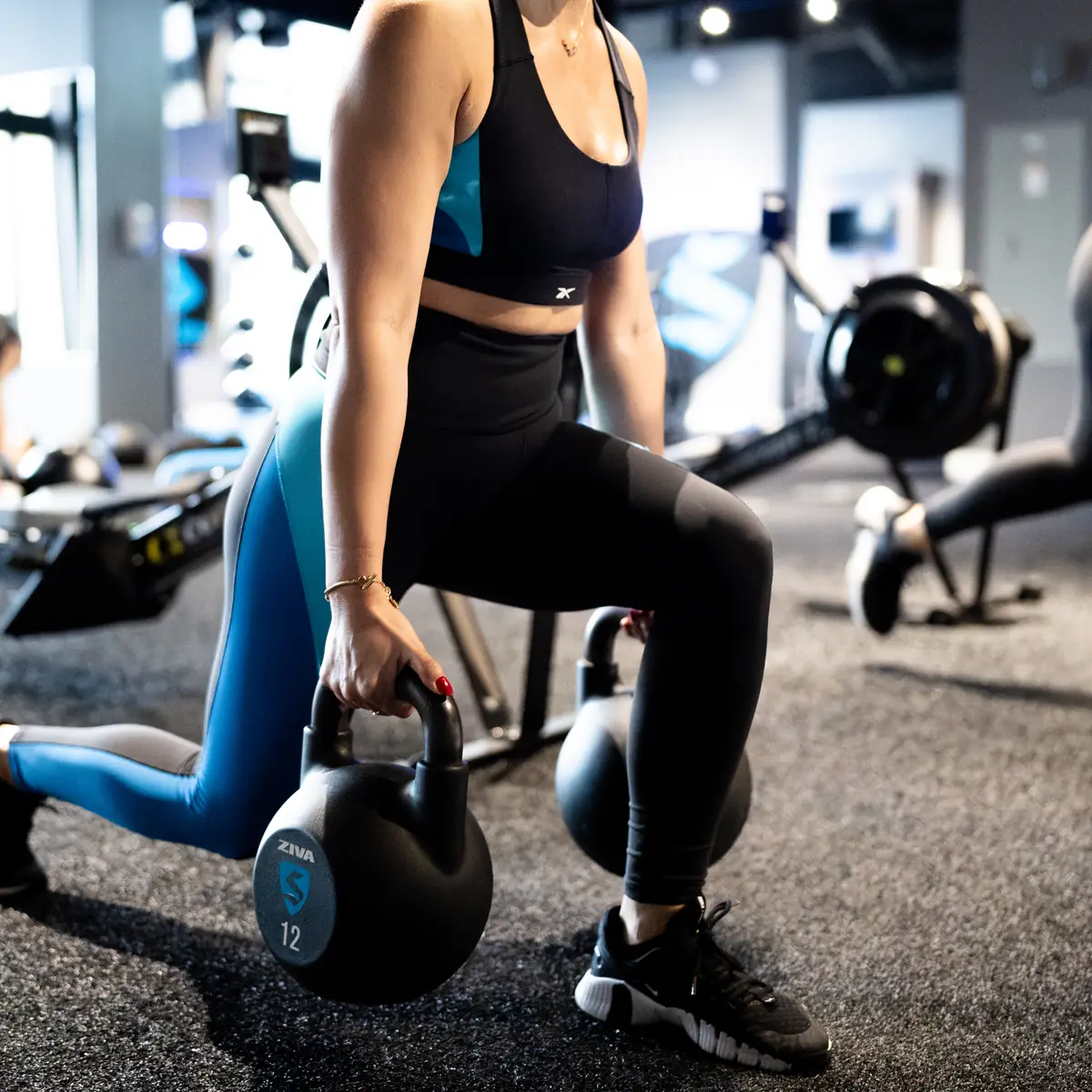
A more sustainable approach is to gradually improve your performance while keeping your technique and range of motion consistent.
One of the easiest ways to do that is to choose a target repetition range.
Imagine your chest press is programmed for 6 to 10 reps.
You might progress like this:
- Perform 6 controlled reps with your current weight
- Build toward 8 reps
- Eventually reach 10 reps with good technique
- Increase the resistance slightly
- Return closer to 6 reps and begin building again
That gives you a clear progression system instead of increasing the weight just because another week has passed.
Technique still matters.
If you technically reach 10 reps but the last few involve shortened range of motion, excessive momentum, or a major change in body position, you may not be ready to increase the load yet.
Own the repetitions before making them heavier.
You should also expect different exercises to progress at different speeds.
A squat may increase more quickly than a shoulder press. A row may move forward while a biceps curl stays at the same resistance for several weeks.
That is normal.
Do not judge the entire program by whether every exercise improves at exactly the same rate.
Tracking your workouts helps you see progress clearly.
Write down the exercise, resistance, sets, and repetitions. The next time that movement appears, you have a specific performance to match or improve.
Adding more sets can also create progression, but it should not be the automatic response every time progress slows.
If several exercises start getting worse at the same time, more training may be the opposite of what you need.
Look at your sleep, overall workload, training volume, and how recovered you feel when the next session arrives.
Progress is rarely perfectly smooth.
Some weeks you add repetitions. Some weeks you add resistance. Other weeks you repeat the same numbers but perform them with better control.
What matters is that the overall direction keeps moving forward.
How Much Recovery Do You Need Between Upper and Lower Workouts?
Recovery is one of the reasons the upper lower split works so well for four training days.
With the classic schedule, your upper body usually gets two or more days before the next upper session, and your lower body gets a similar break before the next lower workout.
You do not need a complete rest day after every session.
Training your lower body the day after an upper body workout can work well because you are not asking the same muscles to perform the hardest work again immediately.
Still, the calendar is only part of the story.
A moderate lower body workout creates a very different recovery demand from a session packed with hard squats, Romanian deadlifts, lunges, leg curls, and several extra exercises.
Sleep, nutrition, cardio, work demands, and general life stress also affect what you can recover from.
This is why two people can follow the exact same schedule and have very different experiences.
Your performance is one of the best signals to watch.
If normal weights suddenly feel much harder, repetitions keep dropping, or your technique starts breaking down earlier than usual, your current workload may be outpacing your recovery.
Other signs worth paying attention to include:
- Persistent fatigue
- Unusually high soreness
- Poor sleep
- Reduced motivation to train
- Difficulty maintaining normal workout quality
Alternating upper and lower sessions reduces overlap between muscle groups, but your body does not recover in completely separate sections.
Four hard sessions still contribute to your overall fatigue.
The goal is not to feel perfectly fresh before every workout.
The goal is to recover well enough that you can return, train with good technique, and maintain or improve your performance.
Upper Lower Split vs Full Body: Which Is Better?
Neither is automatically better.
A full body routine and an upper lower split simply organize your weekly work differently.
Full body training often makes more sense when you have two or three training days.
For example:
- Monday: Full body
- Wednesday: Full body
- Friday: Full body
That schedule gives you frequent practice with movements such as squats, hinges, presses, and rows, which can be especially useful when you are still learning them.
An upper lower split usually becomes easier to organize when you want four training days.
For example:
- Monday: Upper body
- Tuesday: Lower body
- Thursday: Upper body
- Friday: Lower body
Instead of training everything in the same session, you can give each workout a narrower focus.
That becomes useful when full body workouts start getting too long.
As you become more experienced and want additional exercises or sets, trying to fit everything into two or three full body sessions can create a lot of work in one sitting.
Dividing that workload across four sessions can make the training easier to organize.
Full body training still has a clear advantage when your schedule only allows a few gym days.
If you train twice per week, two full body workouts will usually make more sense than doing one upper day and one lower day.
A useful way to decide is simple.
Full body training may fit you better if:
- You train two or three days per week
- You are very new to strength training
- You want frequent practice with the major movements
- You prefer fewer gym days
- You want a simple routine
An upper lower split may fit you better if:
- You train around four days per week
- You want more focused workouts
- Full body sessions are getting too long
- You want more room for additional exercises
- You recover well between sessions
Do not switch simply because one routine sounds more advanced.
Choose the structure you can follow consistently and recover from.
Upper Lower Split vs Push Pull Legs: Which Is Better?
Push pull legs and an upper lower split can both work very well.
The main difference is how they divide the training week.
An upper lower split separates your workouts into upper body and lower body sessions.
Push pull legs separates them by function.
Push days usually train the chest, shoulders, and triceps.
Pull days usually train the back and biceps.
Leg days focus on the lower body.
A classic four day upper lower routine can train the upper and lower body twice each week with four strength sessions.
A traditional push pull legs schedule often uses six sessions if you want to repeat the entire cycle twice:
- Monday: Push
- Tuesday: Pull
- Wednesday: Legs
- Thursday: Push
- Friday: Pull
- Saturday: Legs
- Sunday: Rest
That is one reason upper lower can be especially practical if you want frequent training but do not want to lift almost every day.
Push pull legs gives you a narrower focus during each workout.
Because pressing and pulling muscles have separate sessions, you may have more room for targeted chest, back, shoulder, and arm work.
A simple way to choose is to start with your schedule.
An upper lower split may fit you better if:
- You want around four training days
- You want each major region trained about twice per week
- You like combining pushing and pulling in your upper sessions
- You want more complete days away from strength training
- You want a straightforward routine for strength and muscle
Push pull legs may fit you better if:
- You enjoy more specialized workouts
- You want more room for targeted exercises
- You genuinely want to train more days per week
- You prefer separating pushing and pulling
- You recover well from the total workload
Neither split wins simply because it has a different name.
The better one is the structure that fits your week and gives you enough productive training without making consistency or recovery harder than they need to be.
Sample Four Day Upper Lower Split
If you want to see what all of this looks like in practice, here is a simple four day upper lower split you can use as a starting framework.
Adjust the specific exercises based on your experience, available equipment, goals, and comfort.
Day 1: Upper Body
- Chest press: 3 sets of 6 to 10 reps
- Row: 3 sets of 6 to 10 reps
- Shoulder press: 2 to 3 sets of 8 to 12 reps
- Pull down or pull up: 2 to 3 sets of 8 to 12 reps
- Biceps curl: 2 sets of 10 to 15 reps
- Triceps exercise: 2 sets of 10 to 15 reps
This session gives you horizontal pushing and pulling, vertical pushing and pulling, and a small amount of direct arm work.
Day 2: Lower Body
- Squat variation: 3 sets of 6 to 10 reps
- Romanian deadlift or another hip hinge: 3 sets of 6 to 10 reps
- Reverse lunge: 2 to 3 sets of 8 to 12 reps per side
- Leg curl: 2 sets of 10 to 15 reps
- Calf raise: 2 to 3 sets of 10 to 15 reps
You get a squat, hinge, single leg movement, direct hamstring work, and calf training without needing an endless exercise list.
Day 3: Upper Body
- Second chest press variation: 3 sets of 8 to 12 reps
- Second row variation: 3 sets of 8 to 12 reps
- Pull down or pull up: 2 to 3 sets of 8 to 12 reps
- Shoulder exercise: 2 to 3 sets of 8 to 15 reps
- Biceps curl: 2 sets of 10 to 15 reps
- Triceps exercise: 2 sets of 10 to 15 reps
The second upper session gives you another chance to train the major patterns without simply repeating every exercise from Day 1.
Day 4: Lower Body
- Hip hinge variation: 3 sets of 6 to 10 reps
- Squat or leg press variation: 3 sets of 8 to 12 reps
- Split squat or step up: 2 to 3 sets of 8 to 12 reps per side
- Leg curl: 2 sets of 10 to 15 reps
- Calf raise: 2 to 3 sets of 10 to 15 reps
Here the emphasis changes slightly by placing the hip hinge first.
You do not need all four workouts to feel equally difficult.
One upper day can emphasize heavier pressing and rowing while another uses more moderate loads. One lower workout can emphasize the squat while the other gives more attention to the hinge.
That small amount of variation can make the week easier to recover from while still keeping the program familiar enough to track.
If you are new to this style of training, resist the urge to immediately add more.
Start with a manageable amount of work.
Give the program time to work, track your performance, and add volume only when there is a clear reason.
What Are the Most Common Upper Lower Split Mistakes?
An upper lower split usually goes wrong for a simple reason: people try to make it more complicated or exhausting than it needs to be.
Here are the mistakes worth avoiding.
Doing Too Much Volume
Training each half of the body twice per week means your sets accumulate quickly.
More exercises and more sets do not automatically create better results.
Start with an amount you can recover from and give yourself room to progress.
Using Too Many Similar Exercises
Several versions of nearly the same press, row, or squat can create extra fatigue without adding much useful variety.
Cover the main movement patterns first.
Everything else should earn its place in the workout.
Neglecting Pulling Work
It is easy for an upper body workout to become mostly chest, shoulders, and triceps.
Make sure rows and vertical pulls receive meaningful attention too.
Neglecting the Hip Hinge
A lower body day made entirely of squats, leg presses, and lunges can leave an important movement pattern undertrained.
Include an appropriate hinge such as a Romanian deadlift or another variation that works for you.
Making Every Session a Maximum Effort Day
You do not need four workouts that leave you completely drained.
Your second upper and lower sessions still need to be productive.
Leaving yourself enough recovery to perform well later in the week is part of good programming.
Increasing Weight Too Quickly
More weight is only progress when you can control it.
If your range of motion shrinks or your technique changes dramatically, the increase may be too aggressive.
Training Every Set to Failure
Hard sets can be productive.
That does not mean every set needs to continue until another repetition becomes impossible.
Too much fatigue early in the workout or early in the week can make everything that follows worse.
Ignoring Recovery
Your program exists inside the rest of your life.
Sleep, nutrition, work stress, cardio, and other activity all affect how much training you can handle.
If performance keeps falling and fatigue keeps building, adding more work is probably not the answer.
Changing Exercises Constantly
New exercises can feel exciting, but constantly changing your main movements makes improvement difficult to measure.
Give key exercises enough time to become familiar and progress.
Failing to Track Progress
You do not need a complicated spreadsheet.
Write down your resistance, sets, and reps.
That small habit makes it much easier to know what you are trying to improve the next time you train.
Choosing a Schedule You Cannot Maintain
Four training days only work when four training days realistically fit your week.
If you repeatedly miss sessions, choosing a simpler routine is not a step backward.
A program you can follow consistently will always be more useful than one that looks perfect on paper but never fits your life.
Final Takeaway
An upper lower split works because it gives your strength training a clear structure without making the week unnecessarily complicated.
Your upper body sessions cover pressing, pulling, shoulders, and arms. Your lower body sessions cover squats, hip hinges, single leg movements, hamstrings, calves, and optional core work.
From there, keep things simple.
Choose exercises you can perform well.
Start with a manageable amount of training.
Track what you do.
Add repetitions and resistance gradually.
Pay attention to recovery.
You do not need the most advanced routine, the longest workouts, or the largest amount of weekly volume.
You need a program that fits your schedule and gives you repeated opportunities to train well.
That is where progress comes from.
If you want help turning that structure into workouts you can actually follow, book a class at SWEAT440 and train with coaches who can help you choose the right exercises, improve your technique, and keep progressing. Book your first class free and experience the difference.
Frequently Asked Questions About the Upper Lower Split
What is an upper lower split?
An upper lower split divides your strength training into upper body and lower body workouts. A common four day schedule uses two upper sessions and two lower sessions each week.
Is an upper lower split good for beginners?
Yes. It can work well for beginners who know the basic exercises and can consistently train around four days per week. If you only train two or three days, a full body routine may be simpler.
Is a four day upper lower split effective?
Yes. Four days fits the structure naturally because it allows you to train the upper and lower body twice each week while still leaving recovery time.
Can you build muscle with an upper lower split?
Yes. An upper lower split can support muscle growth when you perform enough productive weekly training, gradually progress, and recover well.
Can you build strength with an upper lower split?
Yes. You can organize the split around compound exercises such as presses, rows, squats, and hip hinges and use heavier resistance when strength is the priority.
Can you do an upper lower split three days per week?
Yes, although the schedule becomes less even. You can continue rotating through upper and lower workouts across the weeks. If three days is your normal schedule, full body training may also be easier to organize.
Can you do an upper lower split five days per week?
You can, but the extra session should have a clear purpose. More training days are not automatically better. For many people, four days provides a simpler balance between training and recovery.
How many exercises should you do in an upper lower workout?
There is no required number. Around four to six well chosen exercises can cover the major movement patterns without unnecessary overlap for many people.
How long should an upper lower workout take?
There is no required duration. Workout length depends on your exercises, sets, rest periods, and goals. A focused workout does not need to be unnecessarily long to be productive.
Is an upper lower split better than full body training?
Not automatically. Full body training often fits two or three weekly sessions better, while upper lower can be especially practical when you want four more focused training days.
Is an upper lower split better than push pull legs?
Neither is automatically better. Upper lower fits naturally into four training days, while push pull legs may appeal more to people who enjoy specialized sessions and want to train more frequently.
Choose the structure that fits your schedule, goals, preferences, and recovery well enough for you to keep doing it consistently.